
Description
The Plant
The SCIADOPITYS verticillata represents a botanically isolated and visually striking plant. Also called Japanese umbrella pine, it is intimately linked to Japanese culture. This conifer is both the only species in its genus and the sole genus in its family. It ranks among unique plants and botanical relics with its lineage traced back over 230 million years.
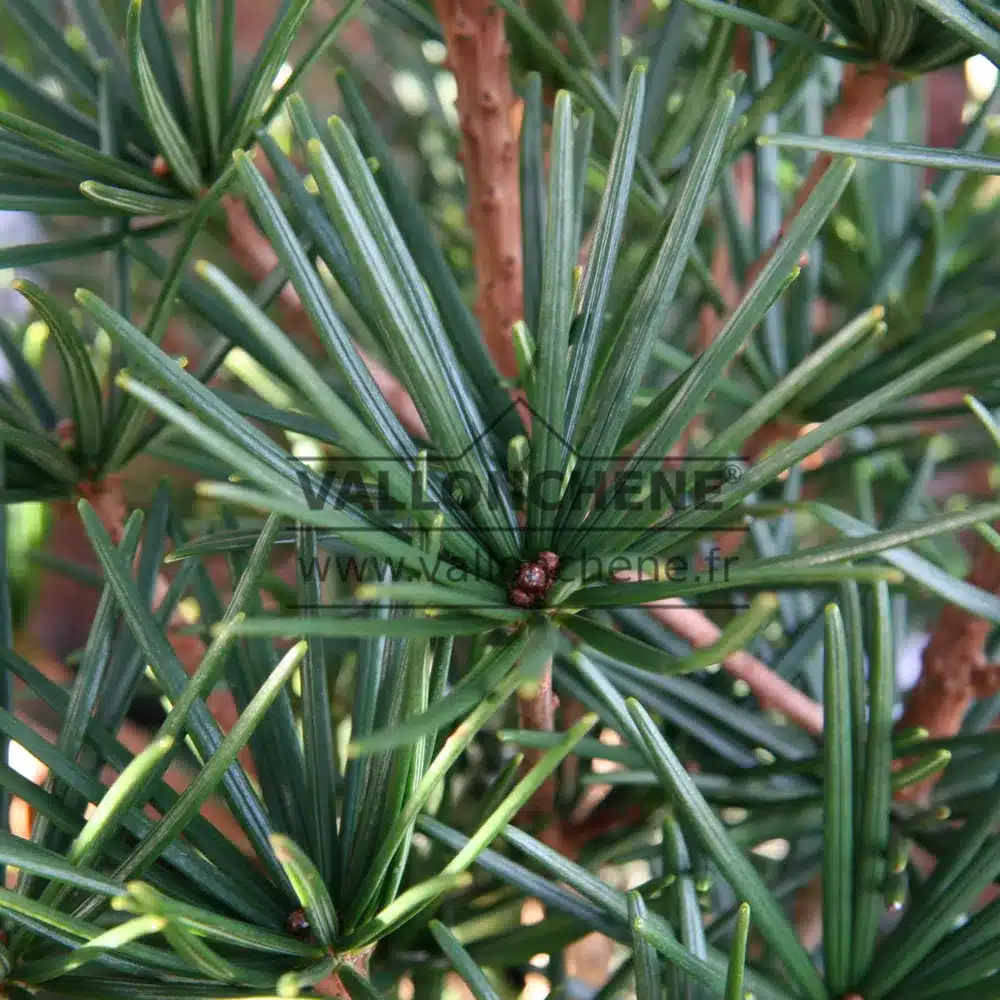
Indeed, its very narrow, long, and thick leaves are reminiscent of a pine. However, they are not needles and do not prick. The leaves are gathered around the branches as seen in the pine family. The foliage displays an intense, slightly glossy green color. Ultimately, all of this gives it a rather exotic appearance.
Furthermore, the Japanese umbrella pine naturally grows in a very conical shape. It then provides an important structural element to the garden.
Then, its height in Europe is very limited (only a few meters) at maturity. It grows very slowly there, which considerably reduces its final size. While in its natural habitat, it reaches 40 meters.
Finally, this exceptional plant is very resistant to severe cold. In fact, it survived temperatures below -22 °C at the Garten of Vallonchêne.
History and Origin
The SCIADOPITYS verticillata is often described as a prehistoric conifer, as evidenced by fossils dating back to the Triassic period. In reality, it is a living fossil.
In addition, given its very particular morphology, botanists encountered many difficulties in classifying it among conifers. It is now found there alone in its family.
This conifer grows in Japan only in an absolutely restricted area. It is composed of just a handful of mountainous regions such as Honshu, Shikoku and Kyushu. It grows there at altitudes of 500 to 1000 meters which are quite humid and rainy.
Populations are reduced to groups of a few hundred. Logging and changes in land use are responsible.
In Japan, it is called kōyamaki and is linked to Kōyasan, the mountain complex of Shingon Buddhism.
In addition, its wood was used for the manufacture of ritual objects and the construction of temples for its durability and fragrance.
It appears in the classic design of Japanese gardens as a symbol of longevity and purity.
How to plant and care for SCIADOPITYS verticillata?
Planting
In order to successfully establish the umbrella pine in your garden, consider the following points:
- Choose a location in partial shade or full sun.
- The location should be cool to moist or moderately moist.
- It likes light or normal soil with an acidic or neutral pH.
- For good preparation of the planting hole, we have designed specific instructions available here.
Care
As with any newly planted plant, follow the watering for the first two years and especially during dry periods. Also read our tips on how to water well and save water here.
Honestly, this plant requires no special maintenance. This conifer is self-sufficient. If you wish to prune it, do so in March before the new growth.

 7/7 from 8am-8pm


 Ask for a photo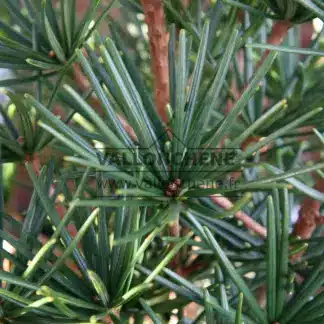
Reviews
There are no reviews yet.