
Description
The Plant
ACER griseum is commonly known as the paperbark maple. It is a very slow-growing tree with exceptional year-round appeal, reaching a small to medium size.
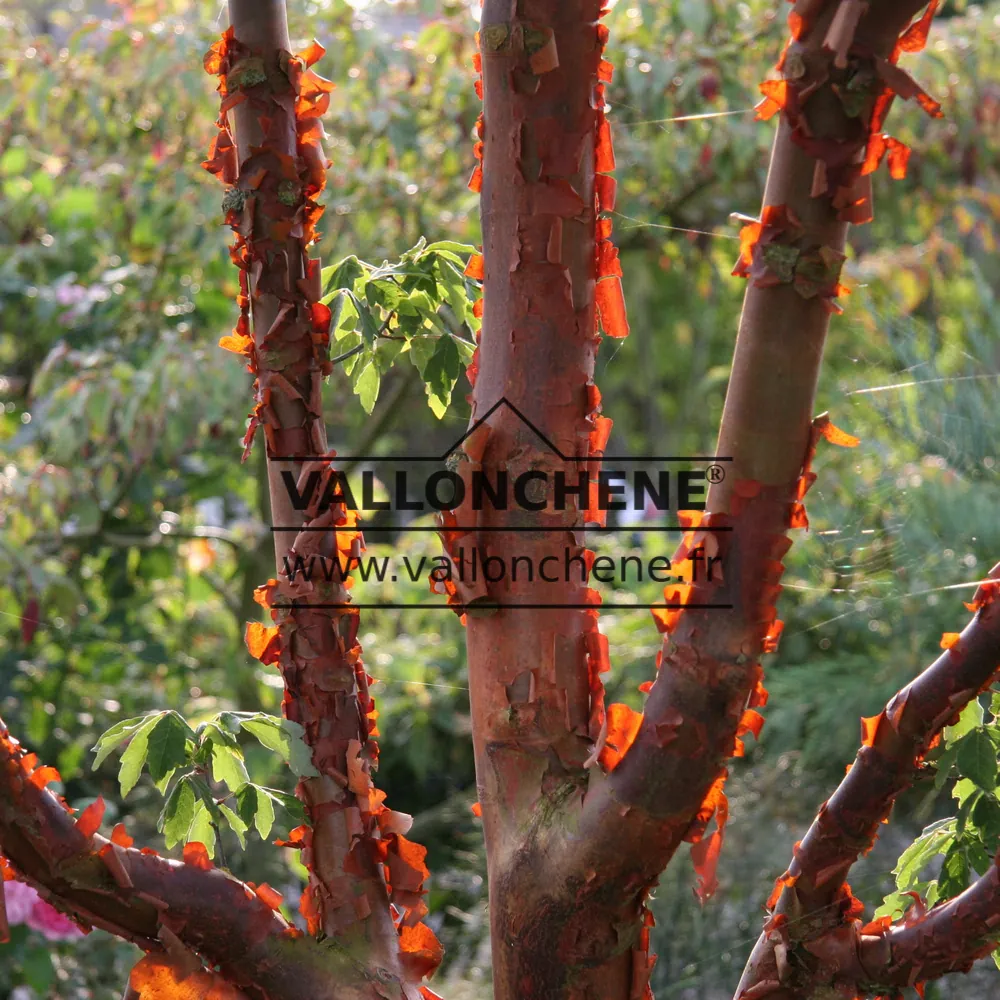
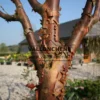
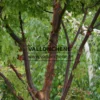
First of all, its copper-colored bark is simply fabulous from January to December. Furthermore, it truly lights up as soon as a ray of sunlight shines through from behind (see photo).
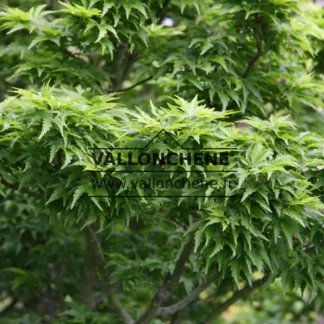
In spring, its slightly downy, charmingly green foliage suits it perfectly. Later on, it produces seeds, though they have a very low viability rate.
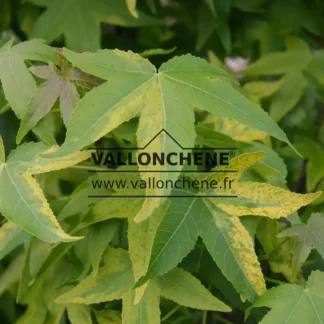
Then, in autumn, a new spectacle begins. The leaves turn yellow, orange, and red (see photo), rivaling even an ACER rubrum, for example.
In winter, its superb bark catches every eye. Its graphic silhouette emerges more clearly, and its bare structure reveals a very interesting crown shape. It becomes clear why, despite its generally rounded form, its clusters of leaves naturally resemble clouds.
As for its hardiness, the paperbark maple fears neither cold (withstanding temperatures below -20 °C) nor drought, as shown by our experience in the Jardin de Vallonchêne.
History and Origin
The natural habitat of ACER griseum is found in the mountain forests of central China, where it grows in isolated pockets at altitudes between 1,500 and 2,000 meters.
In 1892, the French missionary and botanist Father Paul Guillaume Farges collected the first specimens in Sichuan. Later, in 1901, plant hunter Ernest Henry “Chinese” Wilson collected viable seeds in Hubei province while exploring for the Veitch Nursery in England.
Finally, in 1907, Wilson collected additional seeds for Harvard University and its Arnold Arboretum, thus introducing the species to North American horticulture.
Despite its presence in global horticulture, this tree remains a rare and exceptional plant. Wild populations in China remain small and fragmented due to habitat degradation and low seed viability. The paperbark maple is listed as “Endangered” on the IUCN Red List of Threatened Species.
Planting and Care
The Planting
ACER griseum is a highly resilient plant, except for its seeds, which have almost no chance of germinating. It is a small tree that even beginner gardeners can successfully grow. To ensure the best establishment in your garden, keep the following points in mind:
- Plant it in full sun or partial shade. Ideally, choose a spot where it receives morning or evening sunlight from the rising or setting sun.
- The location can be cool to moist, moderately damp, or dry.
- It tolerates light, medium, and heavy soils, with an acidic, neutral, or alkaline pH. Even the very heavy clay soil at Vallonchêne does not bother it.
- For proper preparation of the planting hole, we have designed specific instructions available here.
Tip: If you have a very small garden and wish to slow its growth even further, grow it as a multi-stemmed tree (coppice).
The Caring
All newly planted trees require regular watering during the first two years, and particularly during dry spells. Of course, watering should not take place during the winter period. You can also read our tips on how to water properly and save water here.
The paperbark maple requires no maintenance. Even its magnificent silhouette needs no pruning, as it shapes itself naturally. If you must prune it, do so in March before new growth begins, and apply a pruning sealant once the cut has dried.

 7/7 from 8am-8pm


 Ask for a photo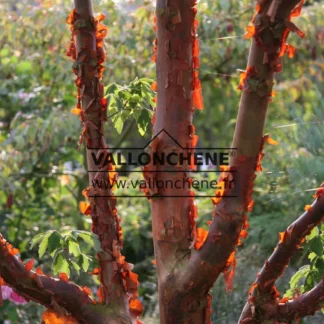
Reviews
There are no reviews yet.