


Description
The Plant
The GLEDITSIA triacanthos f. inermis ‘Ruby Lace’ , commonly known as the thornless honey locust, is a fabulous plant in more ways than one. Although small thorns can sometimes be seen on young shoots during the juvenile stage, they disappear completely over time.
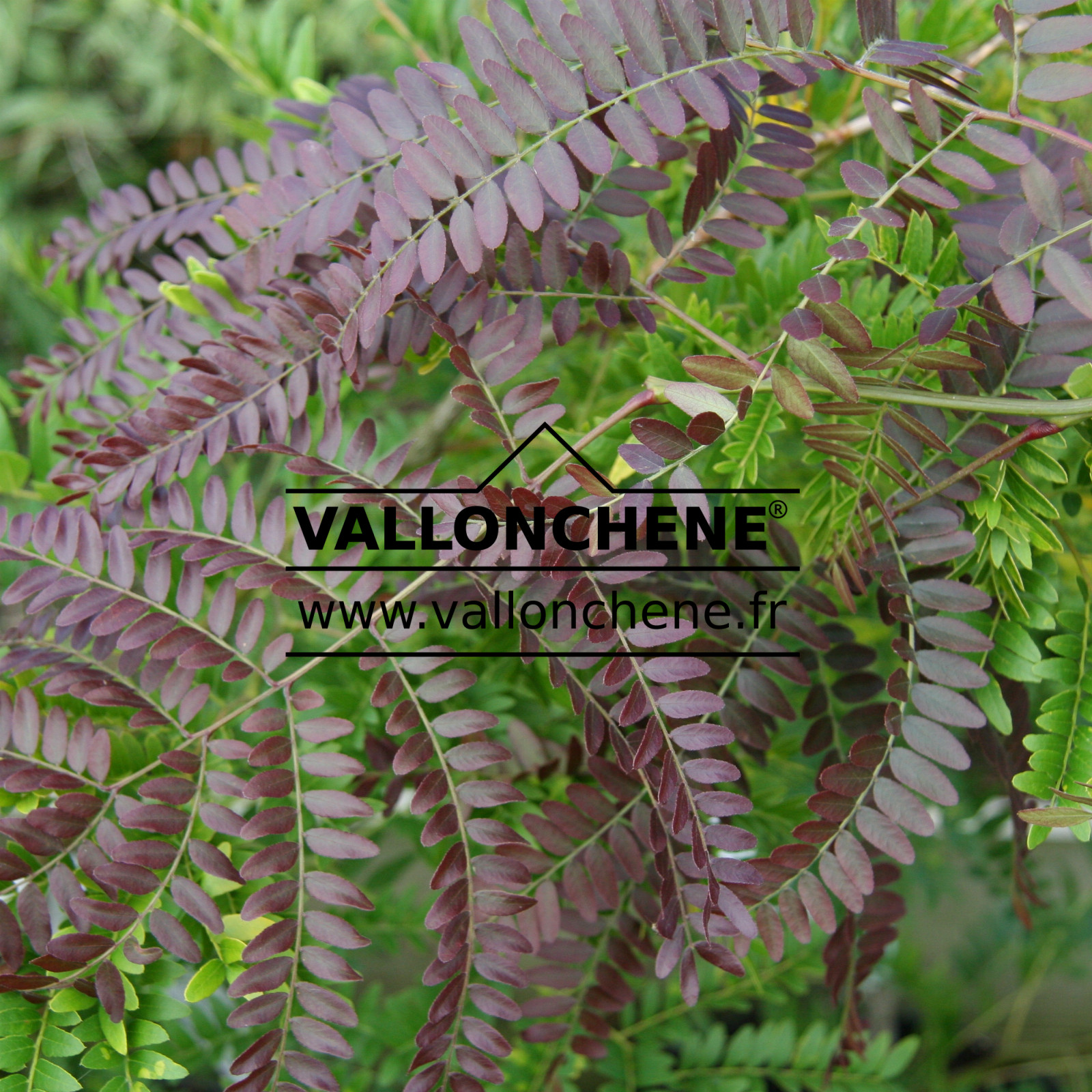
Indeed, it starts with very intense ruby-red new shoots. As the foliage matures, it first turns green before taking on a chocolate/bronze tone. The leaves are very small (less than 2 cm), making the plant exceptionally light and elegant. For this reason, the plant was named ‘Ruby Lace’, as the foliage somewhat resembles lace.
Furthermore, unlike the species type, this plant grows much slower and consequently reaches a much smaller mature size. It does not grow particularly tall either, as the branches become quite long and remain relatively slender.
Given its compact, spreading habit and tiny leaves, this very small tree provides light shade, allowing other plants to thrive underneath. This makes it an ideal choice for garden borders and smaller gardens.
Then, in autumn, its foliage takes on warm copper-yellow and bronze tones.
Note also that GLEDITSIA triacanthos ‘Ruby Lace’ produces no fruit. As a result, you will not have to deal with the sticky seeds typical of the wild species.
History and Origin
The wild species GLEDITSIA triacanthos originates from northern Central America. Its native range extends from the western Appalachian Mountains to Nebraska and Texas, and from South Dakota down to Louisiana. It was introduced to Europe in the early 18th century (around 1700) as a botanical curiosity and ornamental tree.
Indigenous peoples, such as the Cherokee, made extensive use of this tree. They extracted the sweet pulp from the pods for sweetening and food. The wood, being rot-resistant, was used for making bows. The thorns served for sewing and toolmaking.
Even though GLEDITSIA triacanthos f. inermis ‘Ruby Lace’ is often listed simply as GLEDITSIA triacanthos ‘Ruby Lace’, it is indeed the inermis form. In fact, the American Princeton Nursery, which bred this cultivar, explicitly selected it for its inermis genetic origin.
This offers a major advantage over the typical GLEDITSIA triacanthos, which produces branched thorns 10 to 30 cm long on its trunk and main branches. Thus, you can safely plant ‘Ruby Lace’ in patios or along garden paths.
Planting and Care
The Planting
The GLEDITSIA triacanthos f. inermis ‘Ruby Lace’ is a very easy plant to establish and, as our experience has shown, perfectly adapted to climate change and heatwaves. Provided the plant is well rooted, and to ensure the best recovery conditions, keep the following points in mind:
- Choose a full-sun location to achieve the most intense foliage coloration. This can be in a border or as a specimen plant.
- The location can be cool to moist, moderately damp, or dry.
- It tolerates light, normal, or heavy soils, with an acidic, neutral, or alkaline pH.
- For proper preparation of the planting hole, we have designed specific instructions available here.
The Caring
All newly planted trees require regular watering during the first two years, and particularly during dry spells. Of course, watering should not take place during the winter period. You can also read our tips on how to water properly and save water here.
Normally, this plant requires no pruning. It generally gets along very well on its own. If you still wish to prune it, do so in March before the new growth starts.

 7/7 from 8am-8pm


 Ask for a photo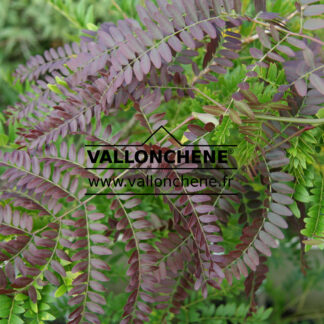
Reviews
There are no reviews yet.