
Description
The Plant
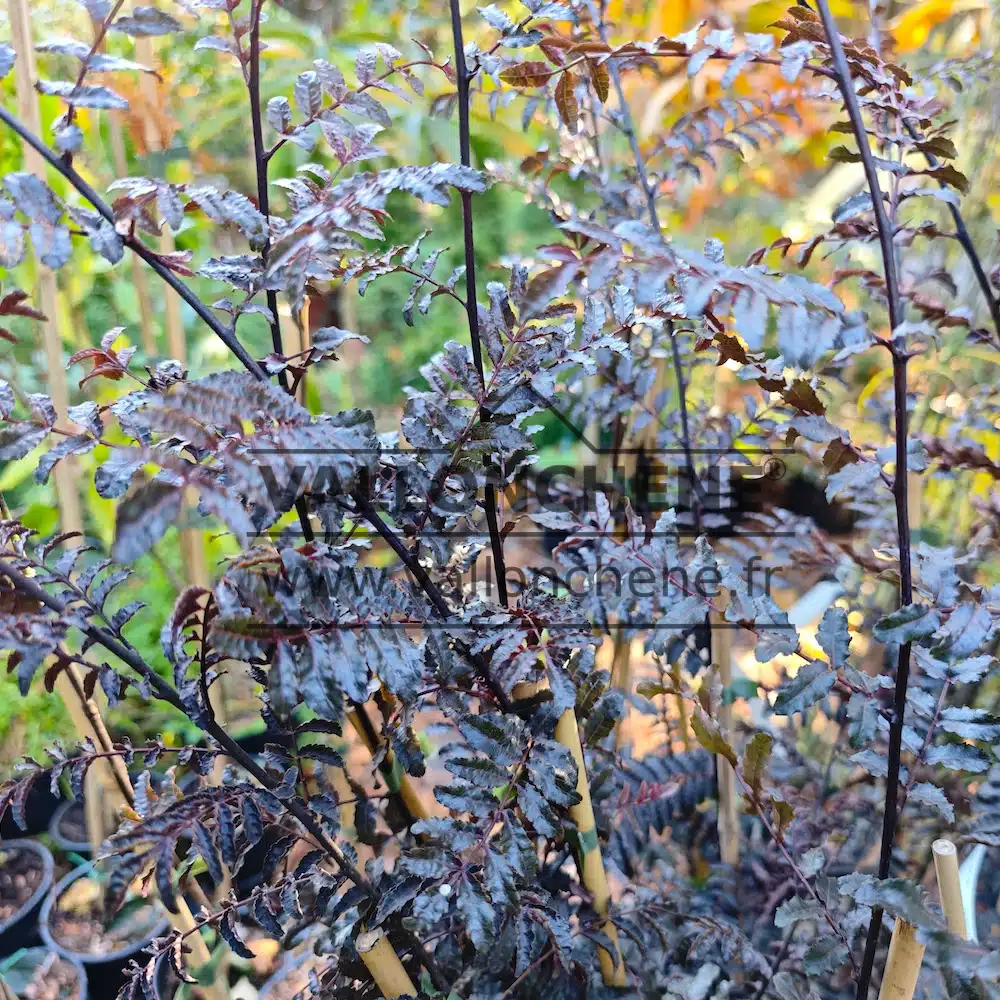
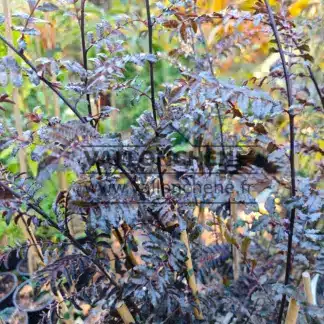
The ZANTHOXYLUM piperitum ‘Purple Leaved’ (or ‘Kuro-fune’), which gardeners also call the Purple Japanese Pepper Tree, stands out as a remarkable shrub thanks to its dark coloring and olfactory properties.
First of all, this cultivar is distinguished by its deep purple leaves, which become almost black on cloudy days. Consequently, it offers a spectacular contrast when you plant it near species with soft green or silvery foliage.
Moreover, its deciduous foliage has a powerful aromatic quality. Indeed, it releases strong notes of citrus and spices reminiscent of the famous Sansho pepper as soon as you crush it.
Finally, this shrub displays an elegant habit that greatly facilitates its integration into a refined landscape composition.
History and Origin
This cultivar comes from the ZANTHOXYLUM piperitumspecies, native to Asia. Today, this horticultural selection appeals to many enthusiasts thanks to its unique aesthetic and sensory qualities. Historically, this plant has a direct link with Japanese gastronomy, since local culture uses the type species to produce the traditional Sansho spice. This is why collectors actively seek out this purple ZANTHOXYLUM. In addition, enthusiasts adopt it because it brings depth, fragrance, and mystery to outdoor landscaping. Nevertheless, it maintains excellent hardiness and beautiful vigor, two characteristics typical of Asian species that adapt perfectly to our climates.
Planting and care
So that your ZANTHOXYLUM piperitum ‘Purple Leaved’ fully flourishes, but also to ensure it retains all the intensity of its color, we recommend you follow these planting tips:
- Exposure: First of all, favor a full sun exposure to maximize the purple pigmentation of its foliage. Indeed, generous sunlight remains the key to revealing all its chromatic richness.
- Soil: Next, this shrub requires well-drained soil rich in organic matter. Even though it shows great resilience, it strongly fears stagnant water in winter.
- Watering: Furthermore, you must water any newly installed plant regularly during the first two years, and more particularly during dry periods. On the other hand, you will stop watering during the winter period. To learn more, we recommend reading our articles: How to properly water your garden and save water and on planting shrubs, trees, and conifers.
- Maintenance: Finally, this ornamental pepper tree requires very little maintenance. You can carry out a light pruning at the end of winter if you wish to maintain a harmonious shape or encourage denser growth. Admittedly, this pruning is not strictly essential; however, it has the advantage of stimulating the production of young shoots. Thus, these new branches will always offer you the brightest colors and the most intense fragrances.

 7/7 from 8am-8pm


 Ask for a photo
Reviews
There are no reviews yet.