
Description
The Plant
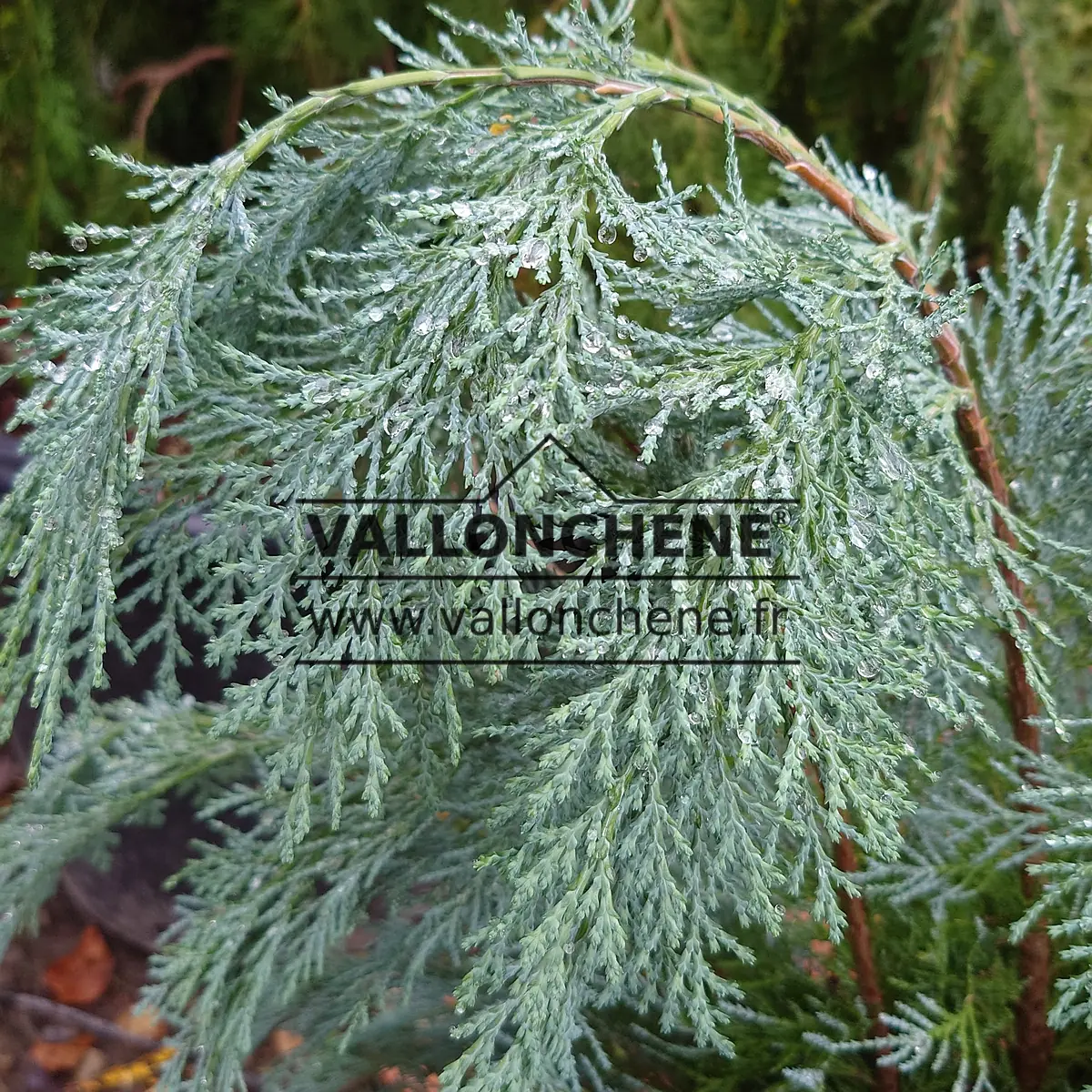
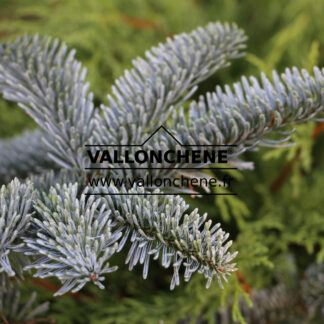
The CHAMAECYPARIS lawsoniana ‘Pembury Blue’, commonly called blue Lawson’s Cypress, is renowned for its foliage of exceptional color (see photos). It is one of the bluest conifers. Its colour,
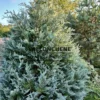
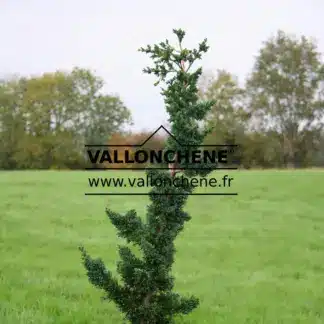
Then, unlike the typical species, it grows much more slowly. The specimen in our photo is about fifteen years old and barely reaches one and a half meters in height with a conical habit.
Thanks to its slow growth and limited development, it integrates well into gardens of any size.
This plant is far more resistant than others both to possible damage from wildlife and to low temperatures. In fact, the specimen in the Vallonchêne Garden shown in the photo survived without difficulty temperatures of -22 °C a few years ago.
Finally, the pleasant aesthetics make this plant indispensable, with its beauty present throughout the entire year.
How to plant and grow CHAMAECYPARIS lawsoniana ‘Pembury Blue’?
- Where should you plant it? Choose a location with light or normal, well-drained soil and a pH from acidic to neutral. The spot should be well exposed to sunlight. Tip: To achieve the most intense blue, it must receive direct sunlight from morning to evening.
- How should you prepare the planting hole? For proper preparation of the pot or planting hole, we have developed specific instructions available here.
How to maintain it ?
Ensure regular watering during the first years, especially during dry periods, until the conifer has established well. Water at the base of the plant and not on the foliage. Furthermore, discover here how to water your garden and save water.
Pruning is not really necessary given its slow growth and small development. If you are obliged to prune, do it
History and Origin
The horticultural selection CHAMAECYPARIS lawsoniana ‘Pembury Blue’ was developed to emphasize the aesthetic qualities of its extraordinarily blue foliage. While it enjoys great success among collector gardeners, it remains little known to the general public. It can be regarded as a collector’s plant.
The typical species, CHAMAECYPARIS lawsoniana, originates in North America, primarily in the regions of northern California and Oregon.
Moreover, the thick bark provides excellent resistance to heat and forest fires.
In the wild, this species is under threat. Euro-Americans discovered it in the 1850s.
The wood is light and offers good mechanical resistance, even after long periods of exposure to salt water. It was traditionally used in boat construction.

 7/7 from 8am-8pm


 Ask for a photo
Reviews
There are no reviews yet.