
Description
History and Origin
The ACER pseudoplatanus f. variegatum ‘Esk Sunset’ (syn. ‘Eskimo Sunset’) comes from New Zealand. Botanists discovered this variety in the beautiful Esk Valley.
Its common name is the Sycamore maple. Today, this exceptional tree appeals to many botany enthusiasts around the world.
Moreover, it brings a truly unique luminous touch to the shaded areas of your garden.
The Plant
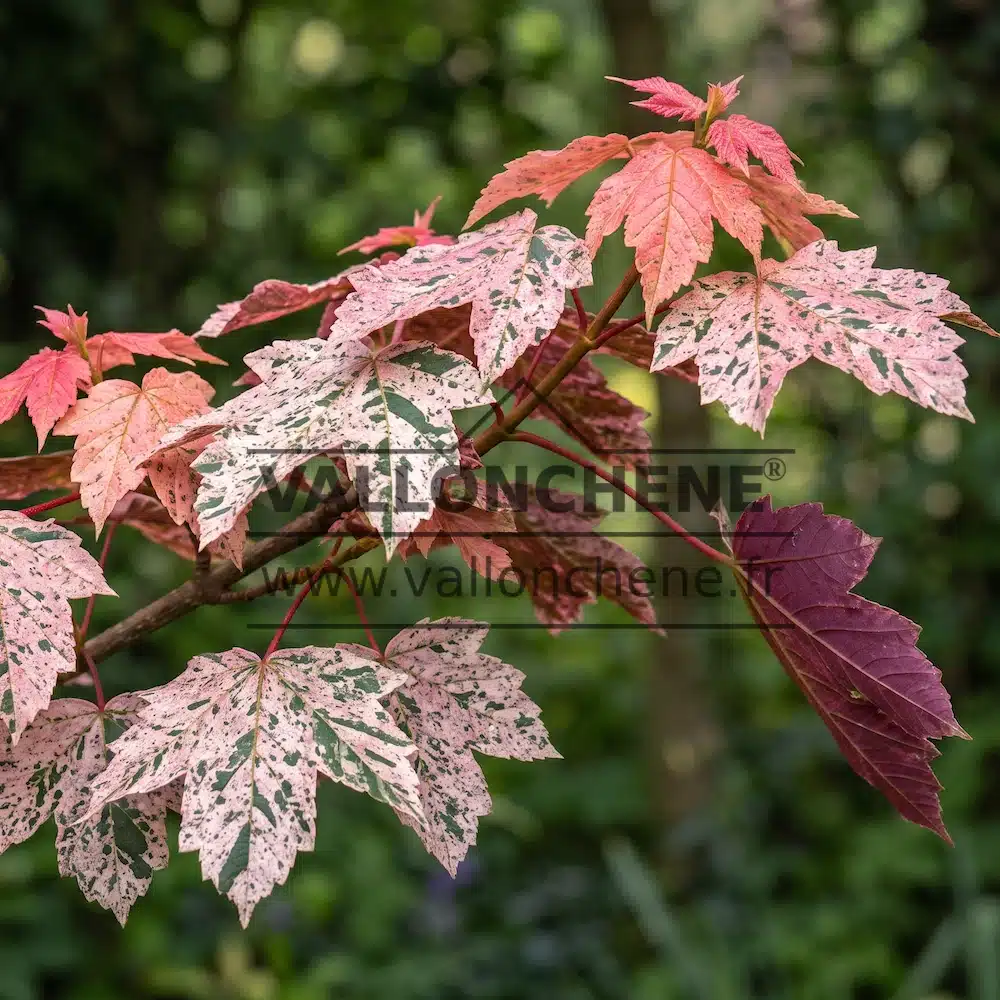
This Sycamore maple offers spectacular foliage with changing colors. In spring, its young leaves first emerge with salmon and bright pink hues.
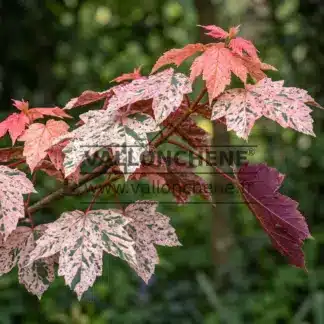
Then, the foliage of the ACER pseudoplatanus ‘Esk Sunset’ (syn. ‘Eskimo Sunset’) is adorned with a very original irregular variegation. You will then observe magnificent spots of dark green, creamy white, and light pink.
Furthermore, the underside of the leaves keeps an intense purple color. Thus, the wind creates a striking visual contrast by gently lifting the foliage.
Regarding its habit, it rounds out gently over time. Ultimately, this tree forms a beautiful, dense, and well-spreading crown.
Its growth remains relatively slow. It will generally reach 4 to 6 meters in height and 3 to 4 meters in spread after ten years. This moderate development is therefore perfectly suited for small gardens.
Planting and Care
To begin, carefully choose the location for the ACER pseudoplatanus ‘Esk Sunset’ (syn. ‘Eskimo Sunset’). This sycamore maple particularly appreciates partial shade. Indeed, the burning afternoon sun damages its delicate variegated foliage.
Filtered light will thus guarantee much brighter colors. In addition, plant it in rich, cool, and well-drained soil. It easily tolerates acidic, neutral, or chalky soils.
However, you must absolutely maintain good summer moisture. Therefore, water your maple regularly during the first three years following planting.
We also advise you to apply a good organic mulch at its base. This mulch will effectively retain the vital moisture of the soil.
Maintenance remains truly minimal throughout the seasons. You will simply cut the dead wood at the end of winter, avoiding frost periods.
Finally, this tree integrates wonderfully at the edge of woodlands. You can also pair it with shade plants like hostas, ferns, or hydrangeas.

 7/7 from 8am-8pm


 Ask for a photo
Reviews
There are no reviews yet.