Posted on Leave a comment

Summer Rest: Why Your Plants Stop Growing in August

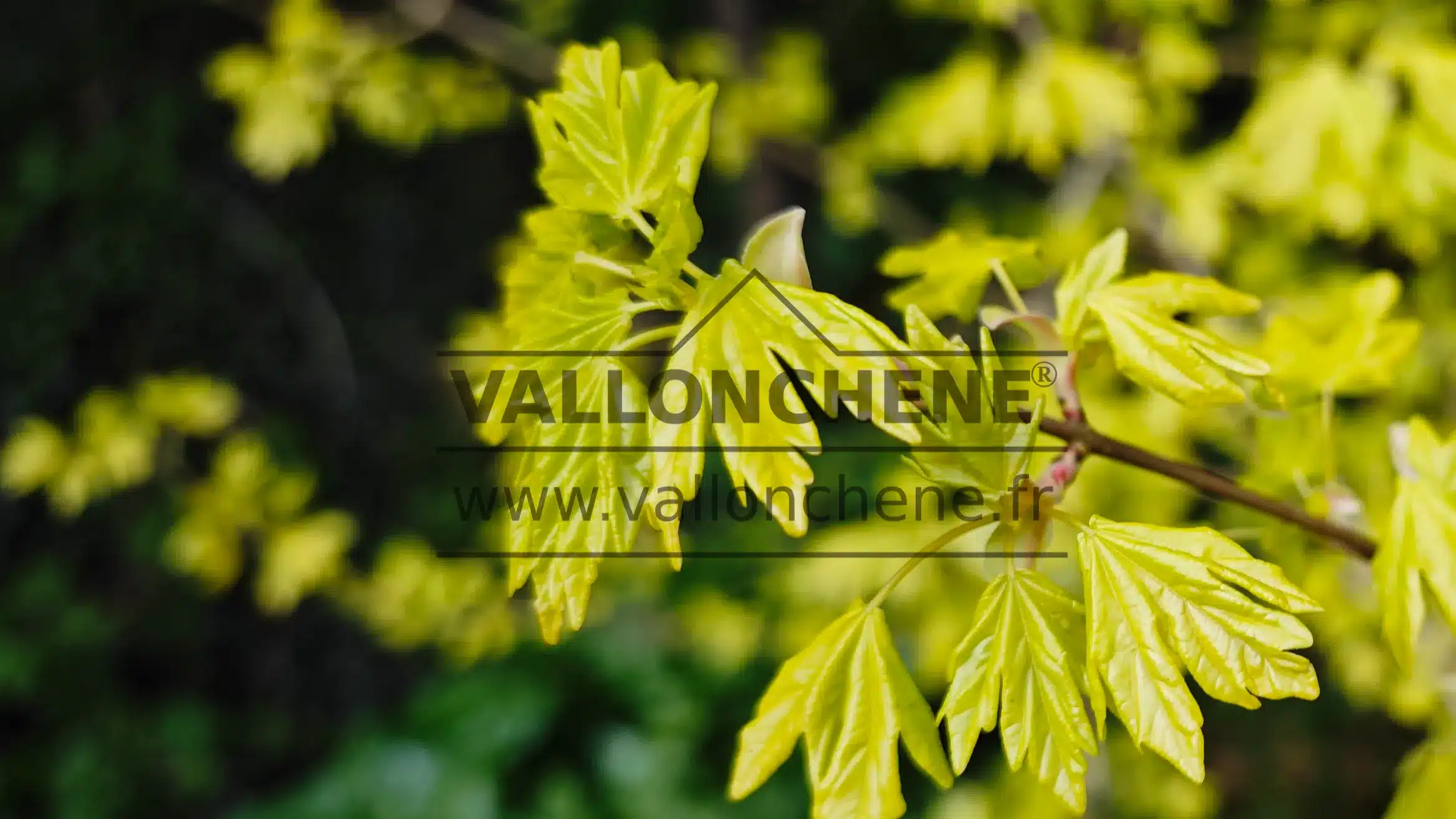
Spring growth of an ACER campestris 'Postelense'

In the height of summer, with the sun shining brightly, you might expect the garden to be bursting with vigor. Yet, as you have probably noticed, in July and August, the growth of many trees, shrubs, and plants seems completely frozen. Young shoots stop growing, and buds lock up.

Don’t panic! Your garden is not dying: it is simply taking its summer nap.

Let’s take a look behind the scenes at what is happening in nature’s great laboratory.

Estivation: The Survival Strategy Against Heat

Everyone knows about hibernation, the deep sleep that certain animals and plants share to get through the winter frost. But did you know there is a summer equivalent? This is called estivation, or summer dormancy.

For a plant, growing requires colossal energy and, above all, an astronomical amount of water. When the thermometer rises and rainfall becomes scarce, the tree must make a choice: continue to grow at the risk of dehydrating, or shut down the machinery to preserve its life. The choice is easily made.

The Secret Mechanism of Stomata

Under the leaves of your plants lie thousands of microscopic pores called stomata. Normally, they open to breathe and absorb carbon. However, by opening, they allow water to escape (this is transpiration).

During the intense heat of August, to avoid emptying themselves of water, plants seal their stomata. The direct consequence: sap circulation slows down, photosynthesis runs in slow motion, and growth stops. The plant enters ‘energy-saving’ mode.

Why This Break Is Excellent News for Your Plants

This visual stagnation sometimes worries gardeners, but it is actually vital. If a tree continued to produce tender, water-gorged young shoots in the middle of August, they would be instantly scorched by the sun or dried out by the hot wind.

By blocking its growth, the plant takes the opportunity to accomplish invisible but crucial work:

  • Wood Lignification (AoĂ»tement): The shoots that grew in spring begin to harden, filling with lignin (the component of wood). This process allows the branch to resist future winter frosts.
  • Root Development: If energy is no longer directed into the leaves, it is sometimes redirected to the deepest roots to seek out moisture wherever it hides.
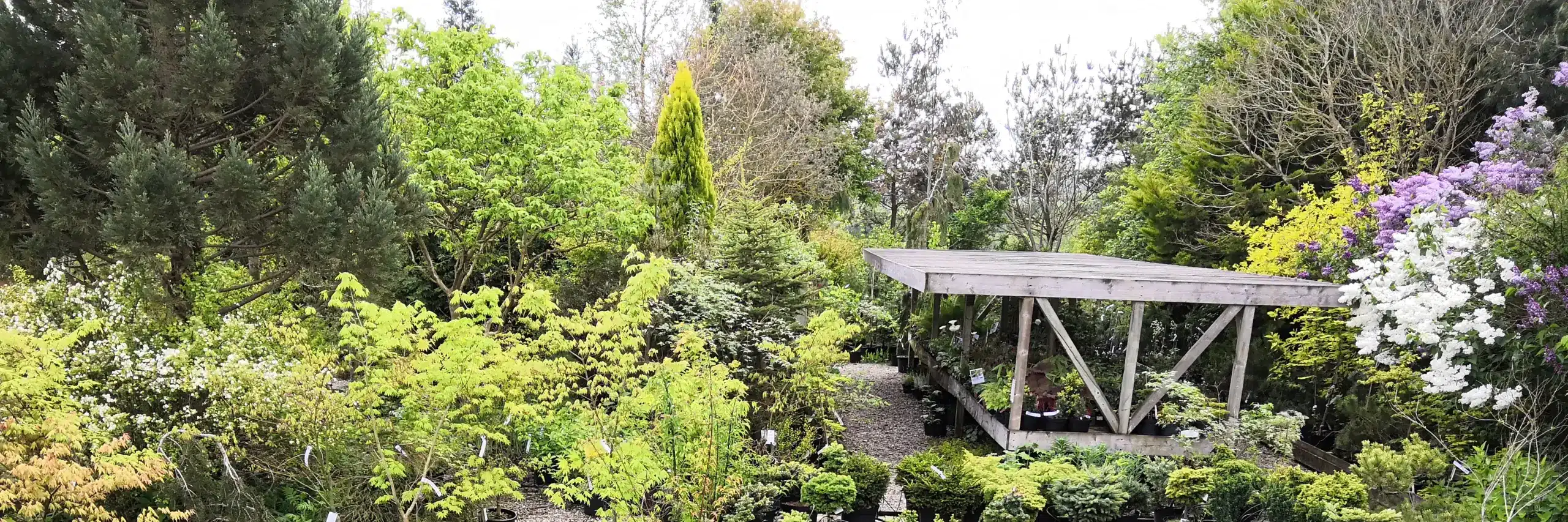
    The VallonchĂȘne Nursery in spring
Vallonchêne Nursery in spring
VallonchĂȘne Nursery in spring

💡 Did you know? The trap of greenhouse plants raised ‘on life support’

This hardening phenomenon explains why plants from intensive greenhouse production often turn out to be so fragile once they arrive in your garden.

In the artificial environment of a greenhouse, protected from the wind and temperature fluctuations, and constantly kept on life support with liquid chemical fertilizers and scheduled watering, plants do not experience these natural cycles of stress and rest. Their tissues remain tender, heavily gorged with water, and their shoots never learn to harden off. Furthermore, having never been confronted with direct sunlight or drying drafts, they lack the reflex to regulate the closing of their stomata.

When they come out of their bubble to join the real soil of your garden, the shock is immense: the first real heatwave, or the first autumn or spring frost, is often fatal.

This is precisely why at the VallonchĂȘne nursery, we grow things differently:

  • 100% Outdoor Cultivation: Raised in the open air, subjected to the whims of the weather, the wind, and real sunlight, our plants learn from a very young age to regulate their strength and stop their growth when nature demands it.
  • ZERO Liquid Fertilizer: At VallonchĂȘne, we NEVER use liquid fertilizers that artificially boost plant tissue at the expense of their hardiness. We let the plant feed at its own pace.
  • A Low-Peat Substrate: We strictly limit the use of peat in our potting soil mix. You can easily notice this by touch and handling: our pots are much heavier! This denser, more natural mix retains moisture better in the long term and provides a smooth transition when you replant into the real soil of your garden.

By accepting this natural and demanding rhythm, our plants develop unique cellular robustness and perfectly mature wood. When they arrive at your home, our trees and shrubs are already armed to face real garden life.

Good Habits for the Gardener in August: Do Nothing (or Almost Nothing)!

Since your plants are resting, you should do the same! It’s the perfect time to kick back and adapt your routine:

  • No Fertilizer: This is the most common mistake. Seeing that the plant is no longer growing, one is tempted to give it a ‘boost’. This is a very bad idea. Fertilizer would force the plant to restart its growth when it does not have the water resources, which would exhaust it or burn its roots.
  • No Severe Pruning: Pruning stimulates new growth. In August, these young leaves would not have time to harden off before winter and would weaken the plant.
  • Keep It Cool: Simply monitor your watering (as explained in our dedicated article) and check that your mulch is thick enough to protect the soil from direct sunlight.

A Word from VallonchĂȘne:

The garden in August is not lazy; it is simply wise. It knows that to last for decades—just like the exceptional trees we love to help you discover every week—you have to know when to stop. So, set up your deckchair in the shade of a large tree, enjoy the freshness of its foliage, and let nature take its nap in complete serenity!
Posted on Leave a comment

The “Hairdryer Effect”: How Heatwaves Burn Our Trees and Shrubs

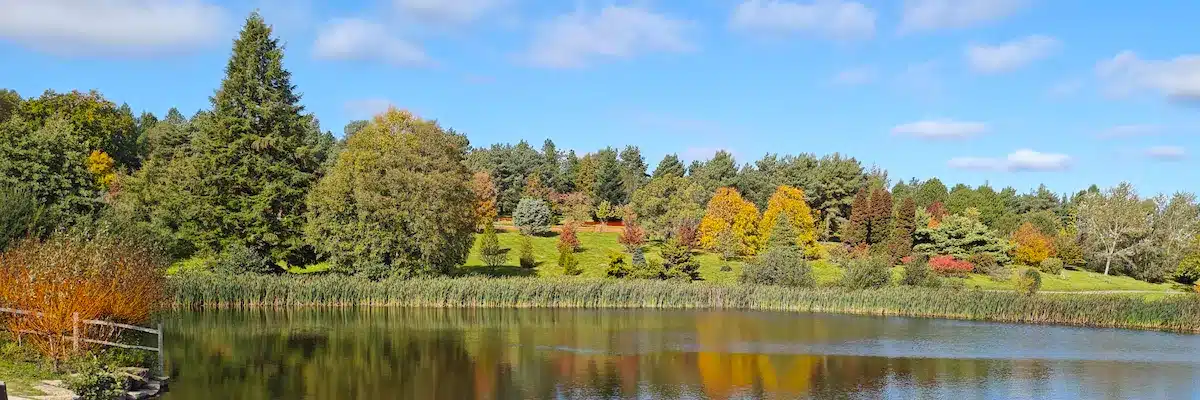
Trees near the lake at Bedgebury National Pinetum, England

When we experience a heatwave, our first instinct is to look for shade. But for the trees that provide this very coolness—acting as true natural air conditioners for our environment—a heatwave can be a deadly event. Scientists and arborists are increasingly using a descriptive term to explain a devastating phenomenon: the “hairdryer effect.”

Although plants are resilient, extreme heatwaves create a physiological “perfect storm” that can lead to rapid decline, structural failure, and death. Understanding this mechanism is the first step toward protecting our urban and natural canopies.

What Is the “Hairdryer Effect”?

To understand this phenomenon, we must look at how a tree manages its water. Trees regulate their temperature through a process called transpiration. To absorb the carbon necessary for photosynthesis, they open tiny pores on their leaves called stomata. In doing so, water escapes in the form of vapor. This evaporation cools the leaf, just as sweat cools human skin.

The “hairdryer effect” occurs when ambient air temperatures soar and humidity levels plummet. The atmosphere then acts like a gigantic heating appliance aimed directly at the foliage.

When the air is exceptionally hot and dry, it extracts moisture from the leaves much faster than the tree can replace it through its roots. Faced with this danger, the tree finds itself caught in a tragic dilemma:

Without cooling, the leaf temperature explodes. The foliage dehydrates, “cooks” under the sun, and ultimately burns. This leads to leaf browning, branch dieback, and, in severe cases, the death of the plant.

The Conditions Required for Damage

A heatwave does not always cause immediate damage; it is the combination of several environmental stressors that triggers the hairdryer effect:

  • Extreme Vapor Pressure Deficit (VPD): This is the most critical factor. VPD measures the “thirst” of the air. High temperatures combined with low humidity create a high VPD, meaning the air has an immense capacity to suck moisture out of plant tissues.
  • Soil Moisture Depletion: If the soil is already dry from a prior drought, the tree no longer has a “backup reservoir” to compensate for the water lost through transpiration. INRAE’s research on forest resistance to drought demonstrates that depleted soil drastically accelerates the breaking point of tree species.
  • High Solar Radiation: Intense, direct sunlight raises leaf temperatures beyond what the plant can manage through its internal cooling.
  • Wind as an Accelerator: While we often think of a breeze as refreshing, during a heatwave, the wind acts like bellows on a fire. It sweeps away the thin layer of humid air that naturally stagnates on the surface of the leaves (the boundary layer), accelerating water loss and intensifying the action of the “hairdryer.”

Is This Also a Problem for Shrubs?

Yes, and sometimes in an even more sudden manner.

Shrubs are just as susceptible to the hairdryer effect, particularly those with thin or large leaves. While they may occasionally escape the stronger winds of the high canopy, they face two major challenges:

  • Ultra-rapid Desiccation: Due to having significantly less biomass than a large tree, shrubs have very limited internal water reserves. They can lose all their moisture in just a few hours during a peak in VPD.
  • Soil Temperature Spikes: Shrubs are located closer to the ground, where radiation and reflection from the earth (or asphalt in cities) create extreme temperatures. This heat can literally “cook” the fine, shallow roots, which are nonetheless the only ones capable of absorbing water.
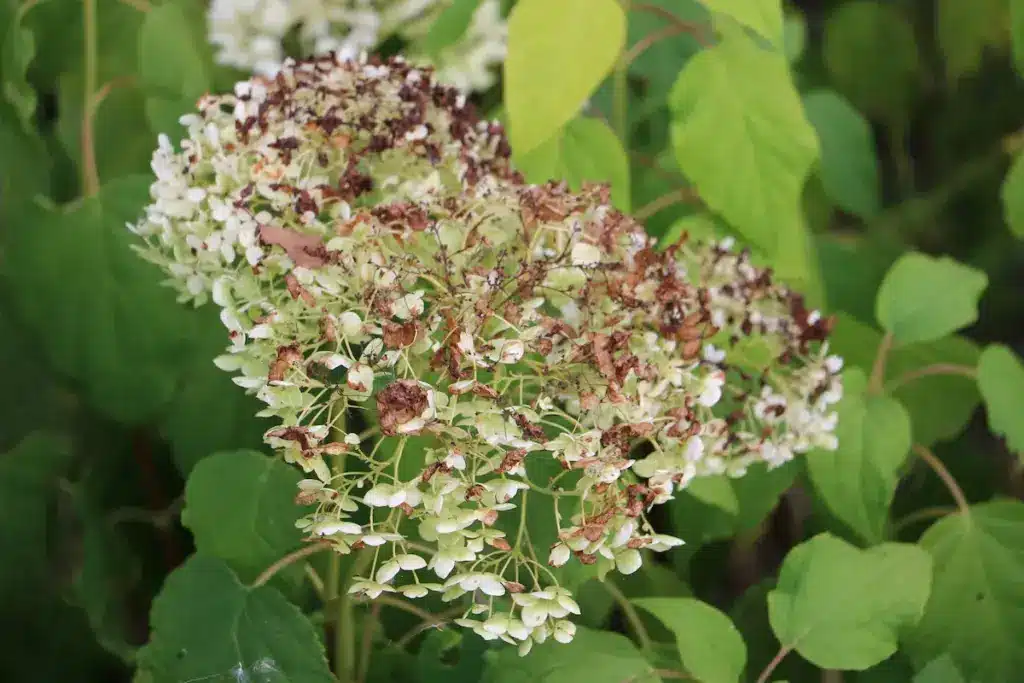
“Hairdryer Effect” on HYDRANGEA Flowers

How Can We Help? The Best Protection Strategies

We cannot control the weather, but we can increase a plant’s “safety margin” against heatwaves through proactive management.

1. Deep, Slow, and Nighttime Watering

Surface watering is ineffective during a heatwave because the water evaporates before reaching the roots.

Strategy: Water late in the evening or during the night. This gives the soil and the plant time to absorb moisture without losing a drop to evaporation. Use drip irrigation or soaker hoses to deliver water deep into the root zone to build a true underground reservoir.

2. Mulching: The Protective Blanket

Mulch is your best passive defense against the hairdryer effect. A thick layer (10 to 20 cm) of organic mulch (ramial chipped wood, dead leaves, straw) around the base of trees and shrubs keeps soil temperatures significantly lower, blocks direct evaporation, and preserves shallow root activity.

3. Absolutely Avoid Fertilizer During Heat Peaks

It is tempting to want to “feed” a stressed plant, but this is a dangerous mistake. Fertilizers stimulate the growth of very tender new leaves. This young vegetation is water-hungry and extremely sensitive to heat, which accelerates the overall dehydration of the plant. Wait until the heatwave passes and the plant shows signs of recovery.

4. Strategic Planting (Anticipating the Future)

As heatwaves become more frequent, plant selection must adapt. For the design of our cities and gardens, Ademe (the French Agency for Ecological Transition) recommends prioritizing “climate-ready” species: local or adapted species that tolerate high VPD and periodic droughts. Avoid installing water-hungry plants in areas exposed to full sun or near reflective surfaces (white walls, patios).

Building Tomorrow’s Gardens Together

At VallonchĂȘne, we have been working toward this goal every day for twenty years. Backed by this extensive field experience, we rigorously select, test, and prioritize plant and shrub varieties renowned for their resilience and high resistance to elevated VPD levels and prolonged droughts.

Every garden is unique, as is its exposure to heat. We are entirely at your disposal to offer advice, analyze your land, and put our two decades of expertise to work to guide you toward the best “climate-ready” species. Do not hesitate to contact us or visit us to design a sustainable, cool, and vigorous landscape together.

To deepen your knowledge on the vital role of our canopy, discover our full article: Why Trees Are Our Best Natural Air Conditioners.

Posted on

How to water a garden and save water

Tuyau d'arrosage avec jet d'eau

Estimated reading time: 5 minutes

We will explain to you in this article how to water a garden properly and at the same time save water. Even if it seems contradictory, we promise to show you some simple and effective techniques to achieve this goal.

All gardeners know that spring, summer, and autumn are becoming more and more complicated periods to manage with the increase in temperatures outside. In addition, droughts are increasingly frequent. Finally, we spend our time literally playing firefighters to come to the aid of the residents of our newly planted or old gardens.

Water a garden like pros

When we started to create the VallonchĂȘne Garden, almost 20 years ago, our land was devoid of shrubs and trees. There was only the big bicentenary oak and a few horn beams and ash trees. So, we had to install complete vegetation.
In addition, at the nursery, we had to learn to administer water resources sparingly for the production of our plants. We would like to share with you our experiences, which have allowed us to install a garden of more than five hectares today.

How to save irrigation water

First, you must know the techniques to save the increasingly scarce water resource:

  • Mulch
    Originally, mulch consisted of a mixture of dead leaves and pine needles. Therfore, remember not to throw dead leaves in the green waste in fall!
    If you do not have these ingredients, use bark mulches, for example.
    Cover your plantations with a thick layer of 15 to 20 cm.
    Mulching preserves the soil moist longer, since it greatly reduces water evaporation by creating a cover. In addition, it keeps soil temperature lower by avoiding direct sunlight.
    Furthermore, it also avoids the formation of crusts which prevent rain or irrigation water from penetrating the soil and reaching the roots.
    Finally, mulch not only lowers the frequency of watering, but actually limits the development of weeds! So, you will have less to weed.
  • Do not water during the day, except in extreme cases. Water in the evening so that the soil can soak up the water. Then, it can be released the next day when the sun heats up.
    At the same time, this allows plants to store moisture to better withstand daytime heat.
  • Use a drip system to better target watering locally and adapt the quantities of water according to the plant. For this, use drippers with a more or less important flow.
  • Avoid peat and heather soil
    Peat and heather earth are often recommended in horticultural books and television programs to lighten the soil. To lighten the soil, you can also use compost. Thus, you will simultaneously provide nutrients for the plants.
    But, why not use peat or heather earth? Indeed, heather soil contains a high percentage of peat. The problem with peat is its extreme difficulty in being moistened again once it is dry. Especially since this happens easily and frequently in dry periods.
    Finally, scientific studies have proven that peat carries certain diseases such as verticillium wilt, which is fatal to Japanese maples.

Where should you water?

For plants that are planted in full ground for less than two years and perennials, water directly at the base of the plant.
For older plants, if you notice suffering due to lack of water, they should be watered more widely depending on the development of their roots.

When should you water the garden?

Often, gardening beginners wait for plants to show the first signs of lack of water. This can be manifested by the leaves starting to wilt. This is a terrible practice, as it creates considerable stress for the plant and does not work for plants with tougher foliage (usually evergreens). Such repeated stress can even lead to the death of the plant. Every so often, the watering also comes too late then.

To know easily if the plants in full ground need watering, buy a rain gauge for a few euros. It will tell you how much rain has fallen. If you do not register at least 15 millimeters of water over the week, you must water. One millimeter corresponds to 1 liter of water per square meter.
Finally, for potted plants, just feel with your finger to see if the substrate is moist. Weigh the pot if necessary.

How much water do you need to water the garden?

While it is easy to determine how much to water a potted plant, it is very complicated to determine how much to water a plant in full ground:

  • For perennials
    Water at least 5 liters per week and at once.
  • For shrubs
    Water at least 10 liters per week and at once.
  • For the trees
    Water at least 20 to 50 liters of water per week and at once.

TIP: We use garden hoses frequently, or we would end up with monkey arms. However, it is then difficult to know how much water the plant has received. This is very variable depending on the flow of the pump or the water network of the house.
To know how to dose with a hose, start by filling a garden watering can with your garden hose. Count all this time until filled. This way, you get an idea how far to count to administer a full watering can.

Subscribe to our free newsletter!

Subscribe to our free newsletter and automatically receive our new publications on plants and gardening in general. If you no longer want it, you can unsubscribe with a simple click.

Souscription Générale EN sans OPT-IN