
Description
The Plant
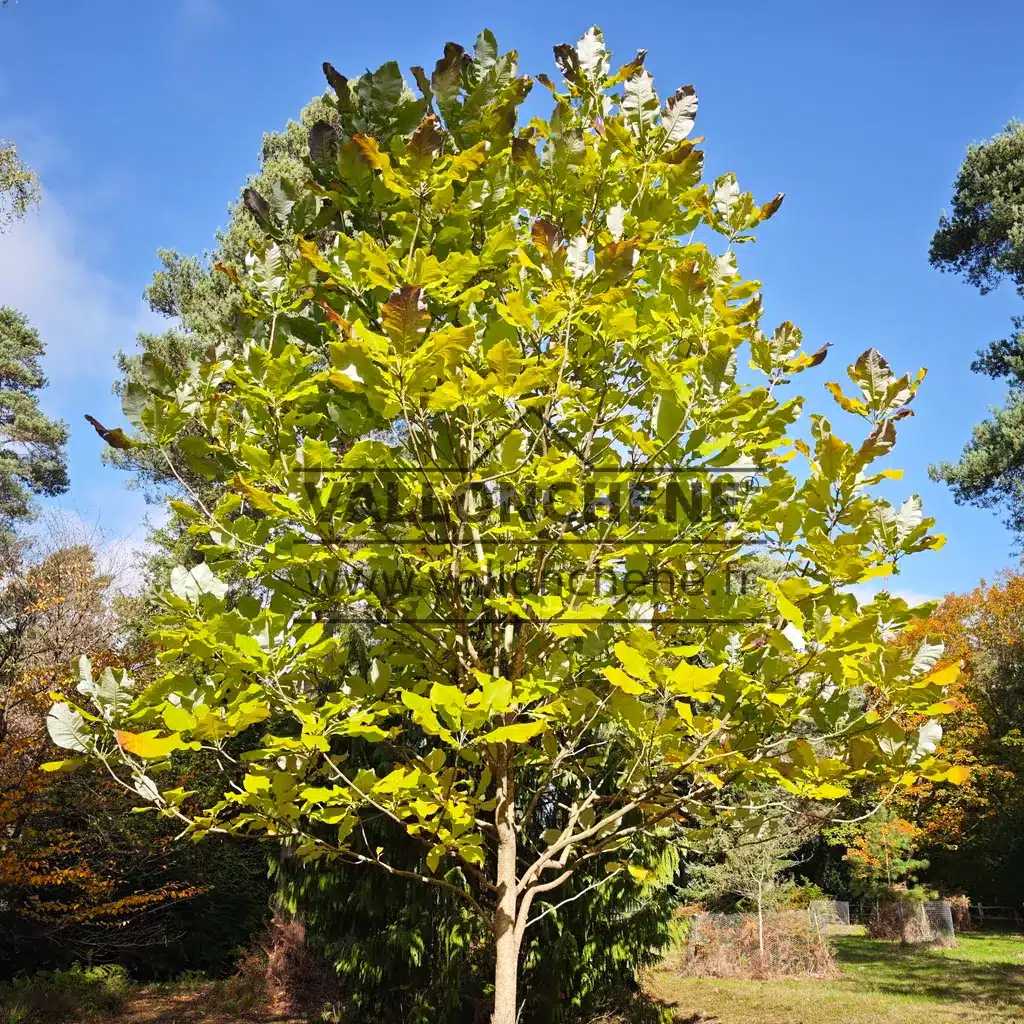
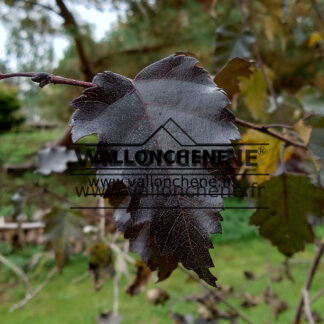
The MAGNOLIA officinalis, commonly called Houpu magnolia, is a deciduous tree. It develops enormous leaves that can reach 50 cm in length.
Moreover, its spectacular foliage does not detract from the interest of its flowers. Like all magnolias, it is covered with large, fragrant white flowers. Flowering occurs in late spring, early summer. This makes it less exposed to late frosts than other deciduous magnolias.
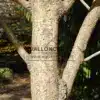
To top it all off, the bark of this extraordinary plant is remarkable. Indeed, it flakes off (see photo) and thus gives it a singular interest in winter.
However, this extraordinary magnolia is classified among endangered species. This is linked to the decrease in its habitat and exploitation for medicinal use.
To view all our magnolias currently available for sale, please click here.
History and Origin
The MAGNOLIA officinalis is endemic to the Chinese mountains. It grows there at altitudes of 300 to 1500 m.
In addition, this species represents one of the pillars of traditional Chinese medicine, where its bark is called Houpu. It is chemically rich in:
- Magnolol (up to 16%)
- Honokiol (up to 9%)
- Magnocurarine
- various essential oils
These substances are widely studied for their anxiolytic, anti-inflammatory, antimicrobial and neuroprotective properties.
Finally, we can say that this is a species linking botany, culture and medical research.
How to plant and care for MAGNOLIA officinalis?
Planting
In order to allow this magnificent tree to settle well in your garden, consider the following points:
- Find it a sunny location. This is particularly important to promote its flowering.
- This tree, given its size, is planted rather in isolation or on the edge of a woodland.
- Prefer a drained location that is moderately moist to dry.
- The soil should be light or normal with an acidic or neutral pH.
- For a good preparation of the planting hole, we have designed specific instructions available here.
Care
As with all newly planted plants, provide regular watering for the first two years and especially during dry periods. Also read our tips on how to water well and save water here.
Prune this magnolia after flowering, if necessary, applying a healing balm to accelerate healing. Proceed only with the application when the pruning wounds are well dried.

 7/7 from 8am-8pm


 Ask for a photo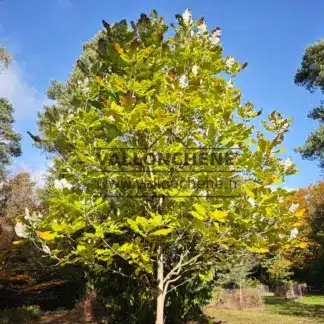
Reviews
There are no reviews yet.