
Description
The Plant
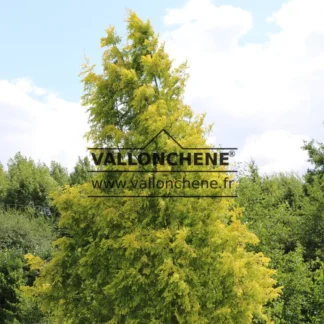
The ATHROTAXIS cupressoides, also called the smooth Tasmanian cedar, is an evergreen conifer of the cypress family. Native to Tasmania, it is distinguished by a very regular conical habit. In the wild, it may remain a shrub or form a slender tree.
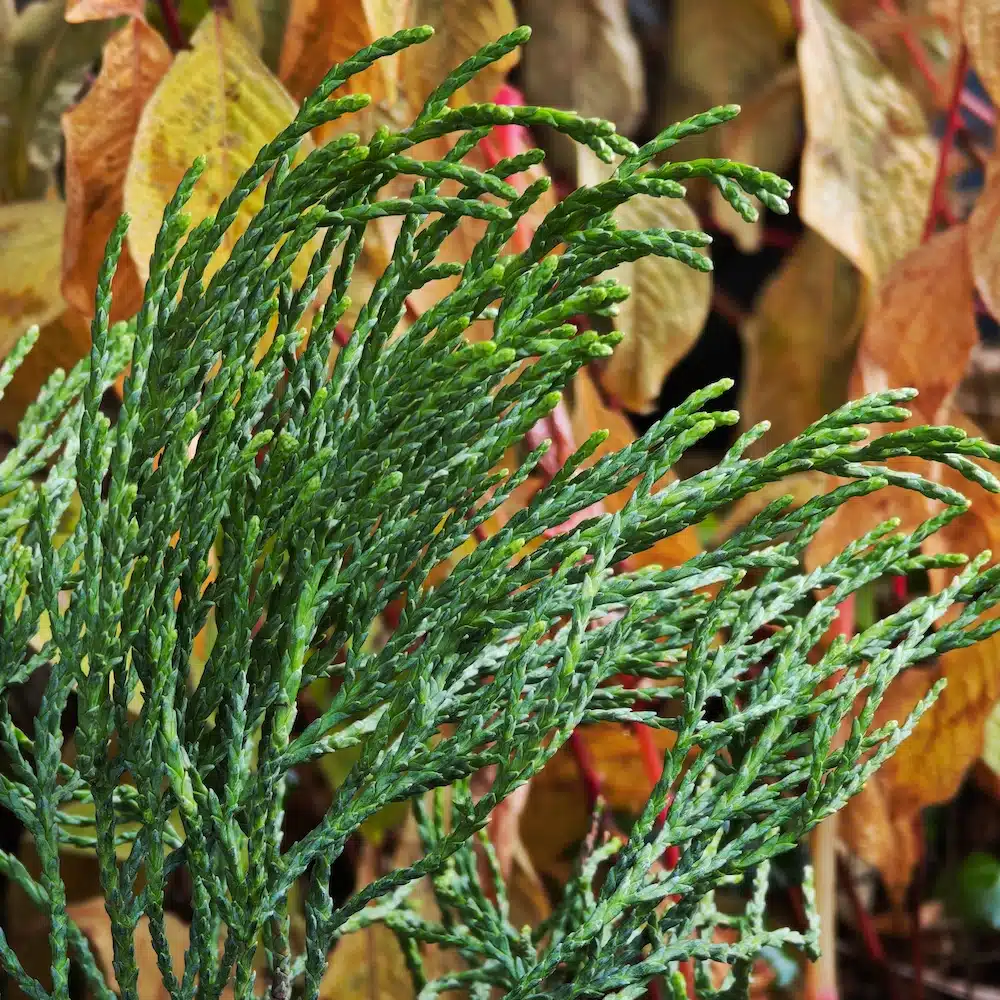
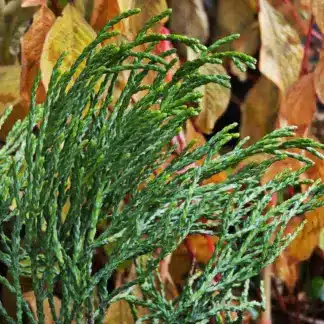
Its development is so slow that it gains only a few centimetres a year. Some individuals nonetheless live for more than 1,000 years. It is therefore one of the longest-lived conifers in the world. Its foliage is made up of short, thick scales, very tightly held against the shoot and arranged in a spiral. They give the branches a cylindrical, rope-like appearance, in a very dark green. The bark, brown and fibrous, hollows out with age.
The smooth Tasmanian cedar bears small spherical cones, 10 to 16 mm in diameter. They mature over several months. Moreover, it reproduces by root suckers, which can grow up to 50 m from the trunk. Finally, it is a mountain species, adapted to cool, humid climates. It remains, however, very sensitive to heat, drought and fire.
History and Origin
The smooth Tasmanian cedar is endemic to Tasmania, the island of the Australian State of the same name. It lives only in the ranges of the west and the centre. It is found between 700 and 1,300 m in elevation. It grows on peaty, moist soils, often on the edge of lakes and marshes. Indeed, it favours cool, well-watered temperate forests at mid and high altitudes.
It is a species of Gondwanan origin, a legacy of the Mesozoic forests. However, it has become rare. It is listed as “vulnerable” on the IUCN Red List. Its populations have indeed suffered from fires, to which they are very sensitive. Today, it is grown in botanical gardens and arboreta. It is found in the British Isles, New Zealand and on the Pacific coast of North America. Cultivation only succeeds where the climate is favourable.
Planting and Care
Planting
It is best planted in a cool climate, sheltered from high temperatures. It tolerates light, but appreciates a dappled shade that protects the foliage from drying winds. As for the soil, it wants a humus-rich, well-drained but moist, rather acidic ground. Finally, a location sheltered from wind and drought suits it perfectly.
To prepare the planting and succeed with this conifer, consult our guide:
https://www.vallonchene.fr/comment-planter-et-entretenir-des-vegetaux/comment-planter-et-entretenir-arbres-arbustes-et-coniferes/
Care
It must be watered well for the first two years, especially in dry periods. Indeed, the roots need constant moisture, without excess. Remember to mulch the base to retain humidity and keep the soil moist. Thus, watering becomes lighter as the seasons go by.
To water at its best and save water, find our tips:
https://www.vallonchene.fr/comment-bien-arroser-le-jardin-et-economiser-leau/
Tip
Its very slow growth makes pruning almost unnecessary. Choose a permanent location: this is a tree that demands a cool, stable climate.

 7/7 from 8am-8pm


 Ask for a photo
Reviews
There are no reviews yet.