
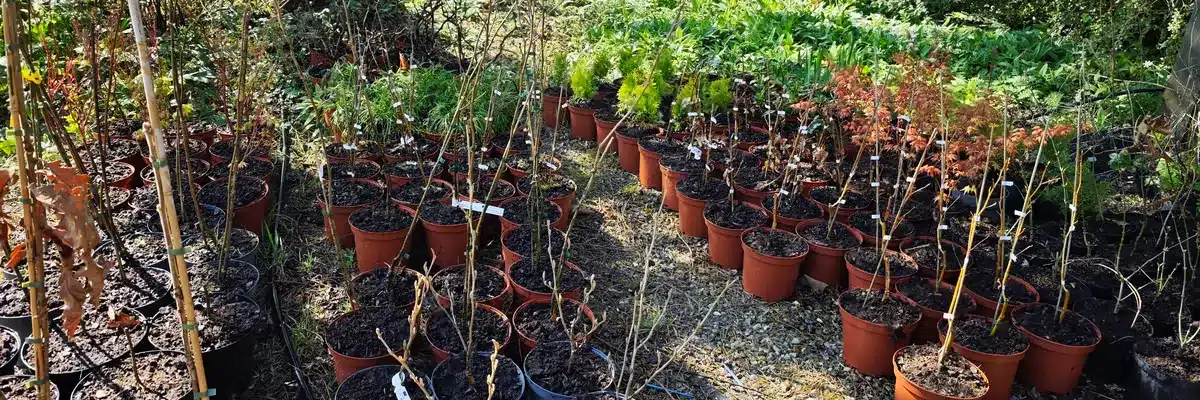
Every gardener knows the traditional proverbs claiming that shrubs, trees, or perennials must be planted in autumn, winter, or spring. For generations, we’ve been told that autumn and winter gardening is the exclusive secret to success when installing new trees, shrubs, or perennials.
However, this traditional timeline has given rise to a very common — and dangerous — misconception. Many gardeners imagine that if they plant in autumn or winter, nature will take care of everything and the plants will never need to be watered. This is a myth. In reality, any newly installed tree or shrub requires attentive watering during its first two years in the ground so that its root system can establish itself properly, especially during dry spells. The only exception to this rule is the period when plants are in total dormancy; watering a resting plant in freezing weather is useless and can even cause the roots to rot.
And what if you couldn’t plant in autumn or winter, or if you find an interesting plant right in the middle of summer? When you walk through the nursery right now, you will see it overflowing with vibrant, healthy plants ready to join your garden. So, can you really plant in the middle of June, July, or August?
The answer is a resounding YES. Thanks to modern container (pot) cultivation as we practice it at Vallonchêne, the gardener’s calendar has completely changed. Here is why you no longer need to wait until autumn to bring your landscaping projects to life.
The Secret: Total Absence of “Transplant Shock”
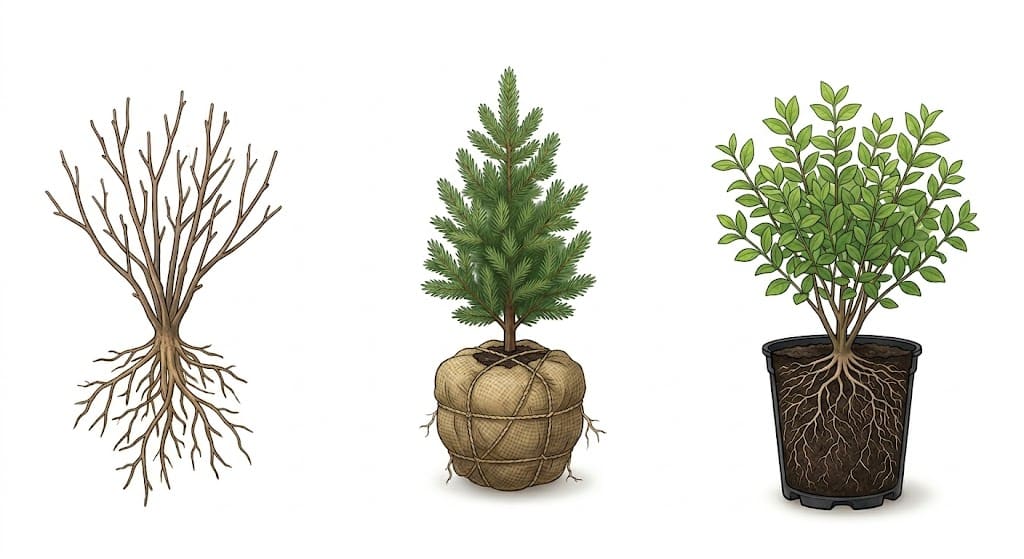
To understand why summer planting is possible, it is necessary to differentiate between cultivation techniques:
- Bare-root or root-balled plants: These are plants dug up directly from the open field in winter, during their dormancy. When they are dug up, a large portion of their roots remains in the soil. These plants undergo immense stress and must absolutely be replanted during their vegetative rest period (in winter) to have time to grow new roots before the first heat spells arrive.
Furthermore, the roots of bare-root plants must even be trimmed before planting, which increases the trauma for the plant. Root-balled plants must be transplanted regularly in the nursery to guarantee a high-quality root ball, a step that is often skipped due to production costs.
IMPORTANT: Certain plant families are strictly banned from this practice, such as many conifers or evergreens, because they continue to transpire beyond what deciduous plants do. - Container-grown plants (in pots): These plants have grown directly inside their containers. Their entire root system is intact, protected, and concentrated within the potting soil. In a way, they take their whole house along with them.
When you buy a potted plant from Vallonchêne and remove it from its container, you do not disturb any roots. The root hairs—those tiny absorbing fibers essential for the plant’s nutrition—remain perfectly in place. The plant undergoes no “shock.” For the plant, moving from the pot into the open ground of your garden is not a trauma: it is simply an extension of its home.
The 3 Big Advantages of Planting Right Now
1. Instant Visual Gratification
Planting in winter requires imagination (and patience!). You install a bare branch while dreaming of what it will look like in the spring. By planting in the summer, the pleasure is instantaneous. You choose a plant for the exact color of its current foliage, its silhouette, or even its flowers. The result in your garden bed or on your terrace is immediate.
2. Rapid Establishment Thanks to Warm Soil
Unlike the frozen ground of winter, the soil right now is warm. This warmth is a wonderful stimulant for roots. If the plant is watered correctly, it will very quickly extend its roots beyond the planting hole to anchor itself sustainably in your garden before the arrival of the next winter.
3. Flexibility (Stop Putting Your Projects Off)
Have you just finished landscaping work? Did you take advantage of spring to redesign a garden bed, or has a space unexpectedly cleared up? Waiting six months for autumn to arrive means leaving bare soil behind (where weeds will establish themselves) and wasting a beautiful growing season. Potted plants offer you the freedom to garden whenever you have the time and the desire.
The 3 Golden Rules for a Successful Summer Planting
Planting in summer is easy, but the heat still requires a bit of attention. To guarantee a 100% perfect recovery, follow these three tips from the nurseryman:
- Double Watering (Essential): Before planting, do not just water the pot. Completely submerge the root ball in a bucket of water for a few minutes until there are no more air bubbles rising. Once the plant is in the ground, water copiously (a full bucket of water), even if it rains! This allows the garden soil to settle flush against the root ball.
IMPORTANT: Every freshly planted plant, even in autumn, requires regular watering during the first two years and more particularly during dry spells. Of course, watering should not take place during the winter period. This also applies to autumn and winter plantings. Read our tips on how to water correctly and save water here. - Mandatory Mulching: Direct sunlight dries out the surface soil. After planting, spread a generous layer of mulch (flax mulch, bark, dead leaves, or wood chips) 10 to 20 cm thick all around the base. This will keep the root area cool, limit evaporation, and reduce weed development.
- Choose the Right Time of Day: Avoid planting during the hottest hours of the day under a blazing sun. Prioritize the late afternoon or a cloudy day. The plant will thus have the entire night to acclimate to its new environment before facing the sun’s rays.
In conclusion: Don’t wait for autumn or winter! Come discover our selection of container plants at the nursery or on www.vallonchene.fr and give your garden the colors and structure it deserves today. We are here to advise you on the varieties best suited to your soil and your situation.

 7/7 from 8am-8pm


 Ask for a photo